Thursday, September 29, 2011

IT CAN BE DONE!

"It can be done within my time"

"It can be done within my budget"

I first saw these two signs printed in large colorful letters, at one of my old jobs, hung above the entrance to the conference room. It made such a huge difference to anyone present during those meetings in that room. Everyone had confidence in each other that the job would get done and whatever challenges that lie ahead were going to be accomplished. We has a sense of possibilities. The words "it can be done . . . " solidified, that there was no turning back. No second guessing. We simply ruled out excuses.

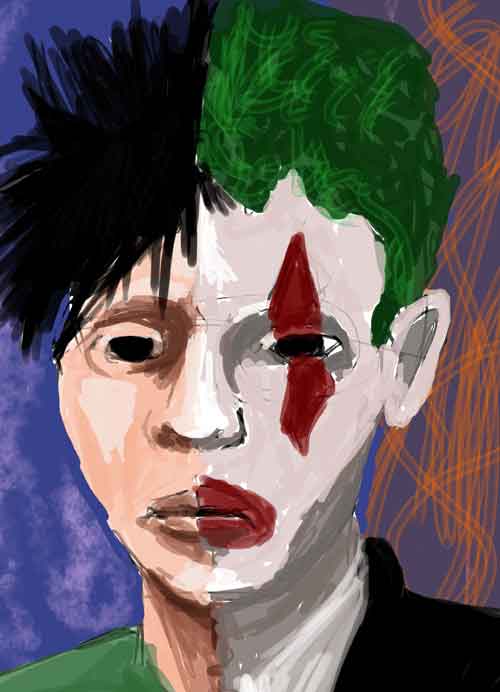
Sure I don't have a lot of time, but I can do a sketch on my 15min. lunch breaks. I can't afford art supplies, but I can draw on this found piece of wood. It can be done. Period.

Humans are often negative. Especially artists. We think it is impossible, because we've been told that all our lives. We think we need a lot of resources in order to accomplish the grand task of creating the big vision we have in our minds. Sometimes that's true. But most importantly, we often "fail to see the many small creative actions that we could make at this very moment" - Julian Cameron.

We dream of making the billion dollar blockbuster feature film when we haven't even attempted a 2min. flip book hand-drawn animation. We dream of the New York Bestseller novel, when we haven't even touched our writing journal in months.

It scares us to think that we can DO something today, at this very minute, that will take us closer to our creative goals. We would rather obsess about impossible things, than take clear small real actions towards possible tasks.

The great thing about being an artist is that we are creative, we are figures of capable imagination. We have 1) the ability to first visualize what we want and 2) to come up with the practical plan to achieve them. Now we just need to follow through.

What can you do right now, one tiny action towards creativity?


Wednesday, September 21, 2011

How to Quit Your Day Job in One Easy Step


First off, thanks everyone one for your patience and understanding. Our crisis over here at the Monkey + Seal cave as been averted, and while we meant to get a new post and newsletter up late last week, some crazy deadlines and an exacto blade going into Monkey's foot sort of took priority. Anyway, on to the post.

Monkey here:

So 1.5 weeks ago, I quit my retail gig to pursue art full time. It was a bit scary (more like terrifying), but when you're at a job where auto-pilot still exceeds expectations, and you've been at the company longer than the CEO, you know it's time to get out.

So what's the magic formula to get out of your job? I'll tell you, but let me give you a bit more background info. If you read our last post "I Have $161,635.78 in Student Loans, $15,000 in Credit Card Debt, and I Want To Be An Artist..." you probably figured out that any decision that involves giving up a revenue stream for me isn't the easiest one to make. Even though that post was originally written in 2009, when you have that sort of crushing debt and aren't some well-compensated white-collar worker and instead are a paper-peddling artist, not a whole lot of debt can be wiped clean in two years. I have knocked down the credit card debt to $8,930.81, but the student loans are pretty much still where they were.

So as you an see, being about $170k in debt doesn't make the decision to leave your job any easier. This is probably compounded by the fact that I have pretty much $0 in savings, and it's not like I'm leaving my job for a full-time salaried position. I'm leaving my job for a fledgling printing business (www.thelordsofprint.com, if you need any t-shirts printed), as well as my own creative ventures that range from illustration and fine art to our screen-printed ties, to DIY wedding invitations (we're not quite ready for launch, but you'll hear about it when we do).
Sort of terrifying, right?

So now I will impart on you the single, solitary step that you must take to quit your day job: Write a letter of resignation, and turn it into your boss.

There, that's it! Pretty easy, right? No magic spell, no earth-shattering revelations here. That's really all that's too it.

While I'm sure you read this post because you were more interested in how to quickly and easily quit your job and start living off doing what you love. To be honest, the one single step IS to just resign. However, this sort of smart-assed answer is here to underline the fact that there IS NOT a single, easy, happy-fun way to quit your job and live off your creativity.

The unfortunate truth about it all is that there is no way for me to tell you how to quit your day job. Everyone's financial circumstances, business acumen, entrepreneurial spirit, tolerance for risk, and general tendency to rush into things with a general disregard of popular opinion are completely different. Because of this, I guarantee that as similar as we are all, you're going to have to make that decision to leave your job for yourself.

Quitting your day job without something certain in place is definitely not for everyone. There are a lot of sacrifices you have to make. You'll be stressed more, and you'll probably be up late working, since all the stuff that your co-workers and your boss are doing (like accounting, marketing, whatever), you'll have to do yourself ON TOP of creating. You'll have to watch your finances more, which could mean not going out to bars as often, or maybe eating lunches of bread and water and dinners of pasta.

Maybe you do have something certain in place. Maybe your partner can help out with the bills or perhaps you've been saving enough to take a leap of faith. While this would relieve a lot of the fear of failing and becoming homeless, you still have to figure out how this is going to strain your relationship or how long you can last in case things don't work out. You're still going to have to do more work, as being your own boss is about five times more work than going to some day job, but is also about ten times as rewarding.

The one thing that is common among anyone who will set out on their own and turn in that two-weeks notice is that they have to believe in themselves. If you don't have faith in your own strength, your own passion, your own desire to become something more, then make the easy decisions. Stay at your job while you build up a career doing creative things. This is the path most travelled by successful artists. I know tons of painters and illustrators who work day jobs and create at night. There is nothing wrong with this, and it's great to save up, work off debt, and make sure that you have enough to live on before pursuing your art full-time. When that time comes to leave, however, you still have to have faith in yourself that you'll make it on your own.

Whatever you need to have that unwavering faith that you'll be okay - that you'll succeed beyond your wildest expectations is what you have to chase. For me, a total safety net is too safe - having something reliable makes me complacent and lazy. Having my ass to the fire is really what gets me going, and knowing that if I don't hustle faster, better, and smarter than before I'll be in some serious trouble, and that knowledge gets my blood boiling and my work done.

For most people, cutting the safety net is probably a terrifying, paralyzing thought, and the best way to build up your confidence is to take the small steps of building up a career slowly, doing as much as you can when you can. You don't have to throw caution to the wind - cutting the safety net can be a safe process of establishing a client base or a successful product line, of vending for years to build up your confidence that your art will make money.

So while it may manifest itself differently for everyone, please be sure to know that choosing to leave your day job is a highly personal decision that is one that must be made with the full knowledge of what you're getting yourself into. Have faith in yourself, and whether it's time to quit right now or in a few years, keep making those steps towards believing in yourself and you'll surprise yourself with that you achieve.

Wednesday, September 14, 2011

An Assault on the Monkey + Seal Cave!

Hey everyone,

We regret to inform you that due to a bit of a crisis over here at the Monkey + Seal cave, your regularly scheduled blog post and newsletter must be moved back a day or two. We apologize for the break but sometimes the poop hits the fan and priorities must be changed.

Back to the battle!

-Rick + Eve

Wednesday, September 7, 2011

I Have $161,635.78 in Student Loans, $15,000 in Credit Card Debt, and I Want To Be An Artist…


First off, we'd like to thank everyone who helped make the SF Zine Fest possible - organizers, creators, and attendees alike. We had a great time, met some really awesome people, got some cool new comics and zines, and even won a few raffle prizes!

So today's post is a reprinting of something Monkey wrote for his short-lived "Monkey Zine" that he published a few years back. Lots of stuff has changed, and a lot has stayed the same. Monkey will be posting an updated version of the story a later on.

The reason we even remembered this was because at the Zine Fest two years ago we had the pleasure of talking about art school and life and pursuing your dream with an UC Davis student (who shall not be named, since we didn't ask for his permission to talk about him). He bought the Monkey Zine back in 2009, and two years later, he stopped by our table again! He even brought the zine with him!

So since this was never published on the Monkey + Seal blog, we thought we should republish it for everyone who missed it being posted on Monkey's personal blog way back when. Anyway, thanks R for being a fan, and best of luck pursuing your true passions!


I am 26 years old and have $161,635.78 in student loans, $15,000 in credit card debt, and I want to be an artist. I already have a Bachelor’s degree in Biology from one of the most prestigious universities in the world, yet because I was too busy running a student acting group and painting, I have no resume-building biology related experience, nor do I care to gain any.

Like I said, I’m about $177k in the hole, and currently my fiancée and I want to be working artists. We’re currently in art school, but I just hit my cap on student loans (wtf, who knew there was actually a ceiling on how much you can take out for education…) so I may not be able to afford another semester. If you ever were interested in pursing art, you’d know that it’s not easy to make money quickly, steadily, or easily. There’s a lot of work, dedication, and a never-ending commitment to your craft that you need to have.

How did I get to where I am? I grew up in Stockton, California, located pretty much dead-center of the state. It’s a politically conservative town of a couple hundred thousand, where public transportation is a joke, my high school had a day care, and our per capita murder rate is the highest in the nation.

My dad works as an environmental coordinator at an aerospace firm and my mom is a dermatologist’s assistance. My mom is very progressive and DIY, my dad, not so much. He’s your standard Democrat, but he’s definitely no Green (my political affiliation of choice). My parents do their best to support my dreams and they are surprisingly calm when I tell them things like I quit my high-paying, health-insurance graphic design job for unemployment during the start of the recession. They divorced when I was 18, and my dad remarried 7 years later. My step-mom is pretty cool, but since I life in San Francisco, and they live in Stockton, I haven’t gotten a chance to really get to know her.

I have a younger brother (5 years younger, to be exact) who still lives in Stockton. He’s super cool, and although we’re into different things (he has something like 30+ pairs of Nikes while I have 2 pairs of running shoes and a pair of interview shoes) we get along pretty fabulously.

My fiancée is pretty awesome. She is a feminist activist, intelligent, an artist, likes the outdoors and is Wilderness First Responder Certified, dances, sings, acts, likes to bake, and is a sexy lady. Basically, she’s everything I could ever ask for.

The two of us are following our dreams of surviving off our art. We make zines, comics, paintings, stationery, sculptures, prints, and also do graphic design work. I have a under-funded and under-advertised non-traditional custom wedding invitation studio. We are also currently very under-employed.

I never thought the recession would really hit us, but it definitely has. As we struggle to make our credit card payments, and rent, it’s sometimes hard to just keep focused on our art, let alone positive about our current situation. We’re not even sure that we can afford rent next month, and there aren’t a whole lot of options in terms of borrowing some cash.

I keep finding job listings that are unrelated to art, but might be kind of cool. I don’t think I’d mind working for a non-profit, or doing something sciencey for underprivileged youth, and I know I’d be great, but I’m always dissuaded by the job posting as I don’t have any resume experience to show how awesome I am with kids, or how I could totally act as an advocate for immigrant reform even though I’ve never worked in a law office.

It’s actually surprisingly difficult (although I guess it’s not that surprising now that I think about it) to get a retail job when you have a degree from UC Berkeley. I really want a job that pays me just enough to get by, and requires nothing mentally taxing, so I can go home stress-free and just focus on my art. Granted, I would most definitely quit as soon as my art career takes off, which I now understand is probably why most prospective employers would be hesitant on taking me on.

So I’m stuck in a resume limbo where I’m underqualified for the jobs I want, and I’m way over qualified for the other jobs I want. But I lucked out and got a job at a place I used to work at, so even though it’s not enough to pay the bills, at least it’s a steady flow of income.

Money and I have never really gotten along. My parents declared bankruptcy when I was 15 or so, and so I worked really hard to get into a good school. I was offered a nearly full-ride scholarship to UC Riverside, but after touring the campus, I knew I would be totally unhappy. I’m sure telling me that it was okay to go to UC Berkeley, where they would be co-signing on my loans, was one of the hardest things my parents have had to do.

Hearing that I would be going back to art school was probably equally as hard to hear, but fortunately for me, like I said before, my parents are surprisingly supportive.

When I first decided to write this, the title was going to be “I Have $161,635.78 in Student Loans, $15,000 in Credit Card Debt, and I Want To Be An Artist FML.” But then I realized, no, not Fuck My Life. I thought about it, and I realized it should be FMLIA.: Fuck, My Life Is Awesome.

Granted, I might not be able to pay next month’s rent. Granted, I may end up eating rice and ramen every meal for the next few months. Granted, I might not be able to finish school. However, I have so much to be grateful for, it’s ridiculous.

I still have a roof over my head and food in my stomach. I have a computer to type this out on, and a job to go to tomorrow. I’ve been able to travel outside the country, learn from some of the greatest minds in the world, and find someone I want to spend my life with. I might not be as skilled as Rembrandt, but I can paint and draw, and even if I’m not as prolific as Stephen King, I get to write zines and make comics.

We often are led to believe that life is about making it big. Being a Hollywood superstar, or a millionaire, or a supermodel, or a business executive. Basically, we’re socialized to care about money and fame and glory and being the best. But I’ve come to realize that while the urge to become a famous artist is still there, that’s not what I need to focus on. I need to focus on the little things that make me happy.

As long as I get to paint what I want to paint, I’ll be happy. As long as I get to wake up next to the person that has the screws to my heart, I’ll be happy. As long as I get to stick my hands in my pocket, pull my hood up on my sweatshirt, and stroll through the foggy San Francisco night, I’ll be happy. As long as my family is healthy and doing alright, I’m happy.

Yes, student loans and credit card bills are painful. They are utterly crushing and overwhelming at times, but I did sign up for them in the first place. It was I that accepted the high interest rates and stellar fees to be able to open my mind to unimaginable wonders, make life-long friends, find my life partner, and to learn my craft. And at the end of the night, when my head is swimming with the burden of debt mixed with inspirations for new paintings dusted with hopes and dreams for tomorrow, I find that I couldn’t be happier. For this I am eternally grateful.

Wednesday, August 31, 2011

The Artist's Multiple Identities


Oftentimes, the artist is described as being manic, we crave solitude to spend time with our work, yet we need to be immersed in life and people in order to experience them and relate them into our art. These two "Identities," of The Introverted Individualist and The Connected Humanist seems very much at odds with each other. And surprisingly, besides the two mentioned, there are more identity aspects that reside in the artist; we often battle between two sides of many coins: we have visions of Humility and Grandeur: of responsibility to be the creative "witness or recorder" in our society while simultaneously we crave to be recognized for that role. Van Gogh often expressed the similar duality that he is a Servant, a creative channel for society/god and at the same time, he has feelings of grandeur as the Savior, the artist who could bring about change in society through his art.

As an artist, you may have realized or come across some of these identities already, either in yourself or other artists:

The Activist - the artist intwined with politics and culture
The Entertainer - the artist who's goal is to amuse
The Warrior - "Art is a Battle" - Edgar Degas
The Careerist/ Productionist - "You tell me what to create, and I'll make it."
The Outsider - the artist who sees himself as not belonging to his society or human race
The Witness - I must record the society of today through my art
The Meditator - "art is in the mind, when it is on paper, it is no longer the purity of what I have imagined"
The Trickster - People buy bad art all the time. I'll create something that I don't care for and charge a ridiculous price and laugh at the stupidity of people for buying into my bandwagon.

. . . These are just a few of the artist identities and they are all very complex.

Why is it even important to know what your identity(ies) are as an artist? Often we do things that seem contradictory, it is because all these artist identities are at interplay with each other. Because these identities often define our roles as artists, it unfortunately often brands us early on and limits our choices. And external events only makes the identity crisis of the artist more complex.

Take an actor who is trained in all aspects of acting, but her/his first handsomely paid gig was in stand-up comedy. S(he) appears in more stand-ups and gets picked up by film producers to do a similar role, in a comedic film. It is not hard for this actor to conclude, I am a comedian, an Entertainer, I make people laugh and society will pay me for it. Were I to do drama, they may not take me seriously. It may even have the opposite effect and people will laugh at me. . .

Now this artist identifies her/himself as the Entertainer, with the expected role that as soon as s(he) is in front of the camera, it is to make people laugh. Although this identity can potentially provide the artist many future paid opportunities for more entertainer roles, the artist becomes cornered and limited. And worse, s(he) limits her/himself by choosing and only sticking to this one identity.

The "opposite" identity can also be true. Take the "Intellectual/ The Shaman/ or Avant-Garde Artist" who is often concern with meaning-making, their art has to be deep. Sometimes, so deep that no one else can dive that far down. This artist believes s(he) must create never before seen work, work that is deep, thoughtful, and new/unfamiliar. This artist refuses to do "commercial" work or "accessible" work for the public. S(he) will not allow herself to "play" to create works for "gist" or simple entertainment. The artist perhaps does not receive the feedback, recognition, or understanding that s(he) deserves and expects. The public is alienated by this artist's work. And the artist becomes alienated to themselves.

Take another example, the Hobbyist - this artist believes that they are creating art for a hobby. While in some aspects this is a positive to not always take on activities as a life-long career, the negative of this identity could be that this artist will never take their art to the "next level" or take it seriously. The act of creating or showing their art in public becomes excused or downplayed by their identity, "it is just a hobby."

To be a "successful artist" you will need to understand and honor all the different aspects of your artist identities; you will need to get to know which one is your primary role, or whether you juggle several, and understand that each identity has its own shadow side. There are positive and negative aspects of each identity and you may also find yourself in simultaneous conflict and at odds with yourself. You will need to learn how to make decisions NOT based solely on what your "identity" is at the time, but ask yourself questions:

whether you are moving closer to yourself or society?
whether the act of creating in this way connects you or disconnects you to what you believe is your purpose as an artist.?
if I were a different or opposite identity than what I'm most comfortable with right now, would I make the same decisions? (For example, if I were a humanist and not an entertainer) would I come to the same conclusions?

Remember, that identity is always flexible. You don't always have to choose. But there is always a danger in not knowing who you are, either. You can start new at any time. You are not bound by your past decisions or how you saw yourself then. We are continually recreating ourselves every day. If you do not change your behaviors, you will get the same results as you did yesterday. So nurture and manifest the identity(ies) that best serves what you want out of life.

Get to know the different multitude of identities that accompanies in being an artist, understand it, debate it, accept that this is part of the process as an artist and honor it. Balance and introspection is the key.

Wednesday, August 24, 2011

The No Jerk Rule


No Jerk Rule - Kick

We all know that some people fall into a certain category of person. These people are sore losers (or sore winners), and they generally try to hound you no matter how much you try to avoid them. They're always talking about themselves and never ask about you, or they insist on telling you how awesome they are. Instead of talking about themselves, they might just constantly critique your work, especially when you want their opinions the least.

These people have a name. That name is "jerk." More accurately, they might not be jerks, but their actions are often that of jerkiness. Whether they try to bring you down or are trying to bring themselves up, they are generally unpleasant to be around. Either way (or even if they reek of some other sort of personality disorder like just being a rude asshat), we're going to call them jerks for now and move forward.

So Monkey + Seal have a rule: it's called the "No Jerk Rule." We actually call it the "No A-hole Rule," but for pleasantry's sake, let's go with jerks.

Basically, we refuse to work with jerks. While it is a lot more difficult to start out following this rule when you're starting out, we've found that it's a great guiding principle for our business. If the jerk is a client, we'll politely and professionally end the relationship. If it's a collaborator, we'll politely and professionally leave the project. No matter how it works - no jerks.

We do realize that at times there are people who seem nice at first and turn into jerks as you begin to work with them. Also, you can be contractually obligated to work with people and you can't back out lest some sort of huge financial obligation. There are many circumstances, but there are ways that sometimes you can get stuck with jerks. How to deal with them? The Jerk Fee.

If you are working with a client who you know is going to be troublesome from the get-go, the best way to deal with them is to basically apply a Jerk Fee. Whatever that fee is, you want to make sure that it's enough for you to feel okay about dealing with this person. This is why for design work you should always limit the number of revisions your client gets for free. The jerks are going to be the one who will make you change a color, then change it back, then add some new text that will completely change the layout, then have you change it back to a new color and remove all the first changes...etc. etc. etc. By basically giving them a free proof or two, but then charging them for each revision, people usually limit their changes after that.

If you're working with a client who refuses to get you assets on time, start charging them a fee for every day late that they turn it in. Your friend of a friend not paying you for that CD cover that you delivered a month ago? Let them know that in your contract, you stipulated payment in full within 7 days of receipt and they you're charging them 10% per day, interest compounding, after each day thereafter.

If you couldn't tell, Monkey + Seal have found that contracts are our best friends. Even for little jobs for friends, signing contracts is important as you can legally bind these people to agree to your Jerk Fees. If they are going to make your life as an artist more difficult, you should be compensated for it, and by putting that in writing, it makes people generally a lot more civil and easier to work with.

Alternatively, if your boss is a jerk, we recommend that you start looking for a new job, ASAP. While there is a myth that everyone hates their boss, it is just that: a myth, so do your best to try and find good bosses. You can have really cool bosses (yes, they do exist!). We don't advise just quitting your job without a backup unless the abuse is too much to handle, and at that point, there are probably other recourses you can take like harassment suits or talking to HR.
The other option to quitting a toxic job is to start up your own business on the side. Want to quit your day job? Start the hustle. Find ways to sell your art. Write an e-book. Auction your paintings off on eBay. Get that portfolio together and start submitting it wherever you can. Figure out what skills you have that people will pay for and get out there and find a way to make other sources of income. Escape the jerkdom!

The one caveat to the "No Jerk Rule" is that you have to act like everyone else has this rule as well. You gotta make sure that you are acting professionally and with integrity as well. Be the artist that YOU would want to work with.

All in all, the reason we really want to encourage people to take up the "No Jerk Rule" is because when it really comes down with it, no one should have to put up with bad behavior. You're an awesome, amazing person, and you deserve much better.

Wednesday, August 17, 2011

How Distractions Can Save Your Life


We all get distracted while we're trying to do work - especially work that seems tedious or boring or that we aren't excited about. Instead of cleaning the studio (which might create a better environment for creating), we end up watching youtube videos or reading blogs. Instead of working on that painting we've been trying to finish for the last two months, we're on our phones playing Angry Birds or Words with Friends.

It happens to the best of us, and with smart phones and laptops, it's even easier to be lured away from our work. And if we're digital artists who are plugged into the net for important emails and looking for reference or using Skype or Gchat to communicate with clients or collaborators, there's always emails about specials, vacations, funny links to viral content, etc. etc. etc. How is someone supposed to get any work done?

The worst thing is that when we give in to our primal urges to watch the latest Gaga video, or whatever it is we're compelled to distract ourselves with, is that the entire time we're distracting ourselves we're also fighting the voice in our head that's saying "You're wasting time! Get back to work!" The same goes for many people who put in long hours to get their creativity done or entrepreneurs that are trying to get a side-business (or two) up and running. While we need breaks to stay sane, every time we decide to take a night off, or to ignore our emails for going on a date or hanging out with friends, we feel like we're failing ourselves a little bit since we don't have the dedication to keep our nose to the grindstone. Guilt and frustration at ourselves begins to well up, and we begin to not even enjoy the break anymore since we know "we should be working!"

In this way, we're not really even taking a break. If we're still thinking about that email that needs to be sent or that shirt that has to get printed, we're not taking a break, we're merely not doing work and raising our stress level at the same time.

Poo poo on this! While we're guilty of this as well (that's why we talk about it here!), we all need to get better at compartmentalizing the difference between work and play. However you do it, you have to make a break between work and non-work. Whether it's scheduling in breaks as you would an important meeting with a producer, or if it's scheduling the time that you have to do your creative work, you have to do it.

You see, if a break doesn't feel like a break, then it's really just a waste of your time. If you're not recharging and feeling good about yourself on a break, you're just distracting yourself from your distractions, so at that point you might as well just be working. But all work and no play makes people crazy, so take a break and enjoy it!

We have found that life is all about priorities. Priorities are different for everyone, but when we say "we don't have time," we're really just saying that we are not prioritizing it. If you say "I don't have time to take a break," are you really engaged every single second of every single hour with some activity that is more important than your own sanity? You can't delegate a task for ten minutes? You can't take five minutes on your bus ride to zone out and meditate? You can't waste three minutes on your lunch to watch a funny video, or tend to your digital crops?

Just as important as it is to prioritize creating, it is equally important to prioritize taking an actual, enjoyable, guilt-free break. So what do you do to rest and recharge?