Friday, April 22, 2011

Vote Monkey + Seal in 2011!


Hey everyone! We (and some of our friends) could really use your help!

So SF Weekly's Best of the Bay is going on right now, and they have a form that you can submit over and over again to vote for your favorite stuff! Even better, it's focus is DIY, which we are all about!!

We're trying to win in two categories: #1 Best Blog (www.blog.monkeyandseal.com), and #12 Best Artist (either Eve Skylar or Rick Kitagawa). You can vote here!

You can also help out our friends and other enterprises by voting for #8 Best Film Festival (Asian American International Film Festival), #10 Best Theater Company (Asian American Theater Company), #13 - Best Art Gallery (Big Umbrella Studios),and #98 Best Boutique (Urban Bazaar).

Please feel free to vote for other venues you think deserve the win too!

Note: You can vote as many times as you'd like, and also if you just want to vote for us quickly and be done (our category is on the first page!), you can just hit next over and over until you get to the "submit" page. You don't actually have to register or anything, nor do you have to fill everything out as long as you go all the way through the submit button (although if you want to, you should!)

To vote again once you've submitted your vote, just copy the URL from your browser and paste it back in where it was and hit enter.

Thanks so so much, and we really appreciate your time, votes, and support! You're truly the best!

Wednesday, April 20, 2011

How to Make Art Into A Sport and WIN


When you're actually watching a sporting event or a film/show about sports (like Rocky, or the Japanese drama Rookies that we highly recommend), it's easy to get swept up in the emotional whirlwind that surrounds sports. People fighting, pushing themselves to be their best, determined to win. Players sweat, grit their teeth, destroy their bodies and fight past their physical limits in order to be the champion, to win the cup, to vanquish their opponent.

It's all pretty amazing to watch, and after getting swept up in World Cup fever and having played sports ourselves, we understand the thrill of victory and the agony of defeat (let's not talk about Monkey's high school water polo team...ugh). I mean, how can you not get a little excited over the Giant's win of the World Series last season?

In art, how can we capture some of that excitement? It's hard to feel the thrill of victory when you're staring at a blank canvas or would rather be playing Facebook games on your tablet rather than painting with one. With sports, the most enjoyable part (at least for Monkey) was always the games. Practice was a necessary evil, but the real fun is when you're playing a game (that's why in films it's always a training montage, not hours of them training). To figure out how to get pumped about painting, we have to figure out why games are more exciting then practice.

Games are more exciting because games or tournaments or matches all have objective outcomes. Besides hockey and soccer and maybe a few other sports I'm not aware of, you don't tie. You either win or your lose. You score more or they do, you get knocked out or you do the knocking out . Say what you will about bad referee calls, sports generally have clear, definitive objective outcomes, and it's those outcomes that we get excited over.

With art, you don't have a point system to keep track of or a win-loss record to deal with. There are no shooting percentages or conversion rates, or a final buzzer that you're racing to beat. But this is where we can start to make art into a sport - through practice. Because to be great at sports, you have to train your butt off. But at the same time, it's way more boring - it's not as exciting to see someone punch a punching bag a thousand times compared to two fighters dancing around each other throwing uppercuts and jabs. Just the same, it's not as fun to work on your art everyday compared to having people look at your final painting and give you feedback on how awesome it is.

In sports, there are the countless hours of training and practice that we aren't privy to as spectators. We don't see the weight training, or the rehab after injuries, the lap running or the thousands of practice swings. We don't have television cameras to watch people shoot hundreds of free throws late at night, and we probably wouldn't watch it even if we did. Just the same, people don't see all that you've put into your art. They aren't up with you at 5am struggling to finish that illustration, and they aren't there to watch you pour over reference books to make sure that your lighting is right. They aren't there to watch you drink another cup of coffee at your way-too-early-morning anatomy class, nor are they there for all the times your silkscreen didn't burn correctly.

One of our instructors used to say that if anyone ever asked you how long it took you to finish a painting, reply "X years" (with "X" being the years since you had started painting) because even though it might have taken you a few hours to actually put all the paint on the canvas, it's taken you years of painting to be able to do it how you did it. Our instructor would say "It took me 20 years to draw this" when we just watch him hammer out a figure in 10 minutes. That's 20 years of training for 10 minutes of game time.

So even though art is more like a sport than one might think, what is missing most of the time is are those clear "game" objective outcomes. Art is generally thought of as subjective, since you'll never be able to tell who is going to end up liking or hating your creation. So if you're in a subjective field, looking for the excitement about objective victories, the only way to go about things is to create your own standards and game play: create your own World Cup.

You can't win a tournament if there isn't one, so make your own. The way to do that is: Goals. Not the kind that you get from hitting a puck into the back of the net, but the kind that you set for yourself. If your goal is large (and it should be for a Championship level match), then break it down into manageable bites. Create your own objective outcomes for you to work towards.

You creating is the preseason. Show up for your daily/weekly/hourly painting session? Score! Finish your painting? Score! Get the reference for your next one? Score! Once you've finished with this phase, get ready for the regular season.

Figure out some concrete goals? You've already won your first game by "showing up on the page." Set a deadline to design those promotional postcards. Score! Hit that deadline? Score! Did you send those to the printer and just get them back in the mail? Score! Get your list of people/companies/galleries to send those to? Score! Did you send the postcards? Score!

Then, as things heat up, realize that you'll move on to the playoffs, and before you know it, you'll be at your Championship match. Whether you have a long or short season, whether your Championship is getting a gallery show or being able to retire early off your art, take it one match at a time. Make sure that your games are ones you can win, as you want to keep that winner's high up as much as possible - it's much better to have a 1000 game season and win them all rather than have a 5 game season with everything riding on each game. Set yourself up for success, not failure. Ride the positive, winning vibe rather than focus on any setbacks because in art, your opponent is always going to be the toughest ever: yourself.

Yes yes, we all have art rivals, or people you want to prove yourself to, or those jerks that think being an artist isn't a profession or a "real job" (although we don't see why that's a bad thing anyway). But when it really comes down to it, you're really fighting against your fears, your doubts, and your insecurities, nothing else. Because if even your rivals or your haters or whomever actually fell off the face of the earth, it wouldn't put you a single step towards achieving your goals. It might make it easier or enjoyable, sure, but the truth of the matter is that unless you release the rhino and defeat your inner demons, you'll never win the games against yourself that really count.

So now that you know how to create a Tournament of Tournaments with your dreams as the grand price that you can win, all that's left is to go do it. Now go take your place in the arena of your choice and take to the field. We (and your dreams) are waiting.

Wednesday, April 13, 2011

Are You Looking For The Wrong Thing In Life? How to Get Back on Track to What You Love


The Great Timble Chase: Find What You Love Most

If you do not know what to do, what your purpose in life is, or where to go from here . . . play the thimble game. Is it hot? or cold? Am I getting warmer?

What parts of the day do you have the most energy? when are you most creative? what are you doing? and who are you with?

If you have no idea of what makes you happy, start to pay attention to your body's reactions. It is the best compass you have. Try to remember when you were most happy. How did you feel? What is your body doing? Re-live that moment and take note of what your body is doing. On the surface it is probably registering simple things like smiling, or shoulders relaxing. And on the inside, you feel competent, grateful, or a sense of energy.

If you still have no idea of what you like to do or what your purpose is, I'm sure you can tell what you don't like to do. Can you recall a job, or task, or being around people you don't feel comfortable with? Your body will do it's best to sabotage you to get you out of the situation. You suddenly can't recall your co-worker's name or you forget to attach that file or you start bumbling like a social idiot. (For me, my stomach tightens up, my throat gets dry, and I would have huge blocks around people's names. This is my cue to exit and do more of the things that make me happy - like painting with Monkey and friends). Take notice of these things. In circumstances that impacts you negatively, you body will try to do everything it can except for that job or be with that company of people.

With that said, there will be moments when you will be faced by positive challenges, but your body will react with similar cues and social ills. Be aware of the subtle difference. The slight difference? On one hand, the task or people that are major negative blows to your life: you absolutely don't want to be there, you feel like dirt, and you would rather disappear through the floor. On the other hand when you encounter the scary, but positive new challenge: you will be scared, but the thought of doing that task still thrills you and if you had the courage (which you do), you honestly want to take that next step. For example, proposing marriage is damn scary or moving to a new city to pursue your dream job is too, but the very thought of ultimately accomplishing that task fills you with excitement and passion. Not everything "uncomfortable" is bad for you, but you'll want to avoid the things that impact your creativity in an uncompromisingly negative way. (Meaning, that there is no payoff in being there at all and in fact, it just hurts you).

"But how can I completely avoid everything I hate doing and only do what I love?" you ask. As we're building and flexing our body's compass power and moving more towards what we love to do. . . yes, there will still be times when you "must" do things or be around people you don't necessary like. In these circumstances, try to think if being there will get you closer to your ultimate creative goal. Is there still a payoff for being there?

There might be days as artists when we have to take on projects, day jobs, and be around people that are not our ideals. But does this day job get us closer to our goals? Does it provide us with the capital to buy art supplies and free weekends and nights to pursue our art (without worrying about rent) while we move closer to embracing creativity full-time? Does the job (you hate?) provide structure and feeling of competence through repeated actions during the day as opposed to the frenzied chaos of creating something completely new for each canvas? (Can you think: "I am thankful for this job because . . . " it provides me with a roof over my head. Or I don't like the people, but I'm learning a lot. Or I hate everything else, but my co-workers are great. If you don't come up with anything at all to be thankful about, quit and find a new one.)

For most artists, we are often torn in our either-or thinking (more about this in a later post). We think all or nothing. Day job or dream job. That's it. So "any compromise is short of perfection," and therefore we have "failed as artists." This limited thinking is harmful to your life's options and creative endeavors.

If you were given all the freedom in the world to just create - you'll get bored - and your art becomes your day job. Human beings need structure and balance. So yes, there will be times you must deal. But as you deal with present circumstances, keep reminding yourself, that this is only just a stepping stone, a transition, a resting stop, you have bigger vegan fish to fry and creative goals in mind and for that you must continually move towards the thimble. Keep playing the thimble game: find activities and people that are (hot!) in line with who you are and your creative life. Eventually, you'll move completely only towards things you love: you'll be surrounded by people you love, who love you back, and you'll be doing the things that make you absolutely happy. All the time. Isn't that worth searching for? Isn't it worth fighting for?

Wednesday, April 6, 2011

Do You Choose to Be Ordinary?


Monkey here:

Life can be hard. Especially if you are chasing your dreams. We've been told that following our dreams is the hard route - we're supposed to just grow up and work crappy jobs and get married and have kids and then retire and call it a life. So we struggle with our ambitions and our reality, with what we hope for and what we see in the immediate future. Thus, for a great majority of us, life is hard. It beats us up at times, kicks us in the ribs, and then makes fun of us. It is not an easy road ahead for those that dare to follow their dreams.

The truth of the matter is that most people aren't going to reach their full potential and aren't going to achieve their life-long goals. For a whole crapload of reasons, they're not going to make it. They're going to settle for being ordinary, with ordinary lives and if they're happy with that, great for them. Don't get me wrong - I don't think that there is anything wrong with giving up or being ordinary, as long as you make that choice. That choice isn't for me, but I don't hold it against anyone if they do choose to be ordinary. It is a very, well, ordinary life path to take.

But for those of us that can't stand to be at a job we don't love, for those of us that want to chase that dream, for those of us that want to achieve more than the average person, for those of us that want to do what we love for a living, this is unacceptable. If you're reading this, chances are you are one of these people who yearn for something more.

Now, I truly believe that people are amazing and there is almost unlimited potential locked away in each and every one of us. Granted, it's harder for some of us to get to that potential than others, and some of us have had more help than others too. However, we all have the potential to reach our goals - but it's a choice we have to make.

We have to choose to be exceptional, or to be the outlier. We have to bust our asses to be extraordinary. There might be a few geniuses out there, but we have to come to terms that we aren't one of them. And neither is the rest of the 99.9% of the population. If you weren't born with some amazing, near-superhuman talent that less than 1 in 1 trillion people have, you're not a genius (plus, you wouldn't be reading this). Michael Jordan, Tiger Woods, Steve Jobs, Bill Gates, Walt Disney. All these guys were not geniuses. They practiced longer, they worked smarter, they failed and tried again and again and again and they never gave up. They asked for help when they needed it and forged a path no matter how bruised or beaten or tired they were.

The point is that when it comes down to it, we all have a choice to make. Do we decide to be the hero in our own stories or are we just going to be a supporting character? Do we decide to settle for what's familiar and safer or do we risk it and go for something frighteningly unfamiliar and new? Do we let the opportunities pass us by or do we jump at them with all our might and damn whether or not we'll land safely?

Yes, choosing to be extraordinary is scary as all hell. While if you've met me at a craft fair or at an art show or at my gallery or wherever, I'm probably not the first person you think would be completely frightened by life. But I am. I'm actually scared of a lot of things. I'm scared of not measuring up to my own ridiculously high (often unrealistic) expectations I set for myself. I'm scared that my art isn't good enough and that no one will pay for my paintings and I'll forever be the stereotype of the starving artist. I'm scared that I'll get turned down from galleries or art studio jobs. I'm scared of calling people I don't know on the phone. But in the end, what I'm scared of most is that I'm going to be ordinary.

So I do the best I can any given day to try and prove my fears wrong. I've failed often, and I try my best each time to learn something and to actually change my behavior and actions in order to prevent myself from failing again. Like we've said before, failure isn't fatal, and it's part of the learning process, but I'd still rather succeed than fail any day.

Some days I end up choosing to be ordinary, and other days extraordinary. My own personal challenge is to push the scale towards the extraordinary. Which are you going to choose today?


Wednesday, March 30, 2011

Does Your Work Measure Up?


It's the question that every creative needs to ask themselves at some point in their career - it's actually a question that you should be asking yourself constantly. Does your work measure up?

For most artists, especially those starting out, often times the answer that we often find is probably "No." For those of us that have gone to art school or had some sort of formal training, we're always studying other artists who have come before us, and are constantly compared to the best students that have preceded us. We've survived constant critiques which tend to focus on what we're doing wrong (after all, our teachers want us to fix our mistakes). If we haven't had formal training, and are self-taught, we've spent even more time studying and comparing ourselves to our role models and other artists whom we respect and learned our own skills from.
Growing up (at least as an artist) in this sort of critical environment can be beneficial, as we're constantly learning from our mistakes and developing our skills in order to create art. By getting feedback and taking a objective look at our own work, we're able to grow and thrive as an artist.
The big pitfall, however, is if you are measuring your work against the wrong metrics.

If you're just starting out on your art career, you have to be going after the right targets. Yes, it's great to shoot for the stars and go after famous artists and try and compete with household names, but at the end of the day, if you're at all discouraged because someone sells more than you, or maybe they got into a gallery that you wanted to get into, if you're comparing yourself to anyone but yourself, you're measuring yourself to the wrong person.

If you compare your own work to anyone else's, you're doing yourself a disservice. Even if you were classmates in school and took all the same classes, your lives are different. Because art is such a personal thing, it is highly affected by your life: your state of mind, your family situation, where you grew up, your income level, your friends, everything. In that way, just because you and Artist X took all the same classes and studied under the same people and both started painting at the same time, you'll never really know their whole story.

Often times we'll compare ourselves to other professional artists and it takes us a while to realize that we're focusing on the wrong person. It doesn't matter what other artists are doing, or how successful they are, or how long they've been painting. What really matters is how much time and effort did we oursleves put into the work. Did we do our very best? Could we have done better?

Art is subjective. If your work doesn't measure up to someone else, who cares? Sure, we want our art to be the best it can be and to succeed and thrive and find a huge audience to enjoy it. But really, none of that is really in our control. We can't force people to like our art. What we can do is make sure that WE love our own art, and that WE are doing the very best that we can be doing. After all, that's what really counts.

Wednesday, March 23, 2011

Does Your Art Say What You Want It To?


Seal here:

This past weekend, I went to see the "King's Speech" with a friend. On the surface, it is a film about a would-be King who struggles to overcome his speech impediment in order for his country to trust him as a "sound" leader. As an visual and performing artist, the "quality of your voice" becomes the deciding factor in being able to deliver your intentions; the pictures in your head needs to be communicated clearly to the public in order to be received and understood.

When you draw and paint, do you strike the canvas boldly? Do you layer the watercolor softly? Do you ink your comic with conviction? or fear? or dread? Does your canvas stutter? soothe? or shout? Or is it more like a quiet boldness? What is the quality of your voice in your art? What is the adjective of how you deliver your art?

When I was a theater director at UC Berkeley, I was exposed to the many different kinds of delivery. Anger in a play could be portrayed in so many different ways: in a bubbling explosion, in a seething whisper, in a self-destructive combustion, in a look, in a glare, in the small corner of the mouth. It was very fascinating that the voice and actor's body had so much range. It was a given that in order to stretch that range and broaden their ability to deliver all kinds of sounds, emotions, and gestures, the actors needed to rehearse their voices and their bodies: they did exercises to stretch their vocal chords, they enlarged and snapped their diaphragms, they expanded and contracted their bodies into different shapes and sizes.

So too, must we, the visual artists: the painter, the writer, the crafts-maker, practice our quality of voice by practicing and stretching our capacity. We must 1) expand our skills in our chosen subject, medium, and the way we see the world. We must also 2) contract and filter what it is we eventually want to say, so that the final delivery of our art is done with intention, some element of surprising impulse, but always with a heart-full conviction.

All great art is a visual form of [song].

Monday, March 21, 2011

Fundraisers for Japan!


Seal's piece for tonight!


So while the death toll in Japan rises after the devastating 8.9 earthquake/tsunami combo, many great organizations are doing their best to raise money for relief efforts.

Warholian.com, along with Rise Japan. is putting on a show tonight, Monday, March 21st at Project 1 Gallery (251 Rhode Island x 16th) from 5pm to 11pm (ie. RIGHT NOW).

It's called Sketch for Japan, and will be raising money for Give2Asia, which has a team in Tokyo helping out with the relief effort.

Monkey + Seal will be contributing two new paintings to the event, where you'll be able to pick them up for under $50.

So it's a CASH night, so bring your large rolls of US currency and we hope to see you there!

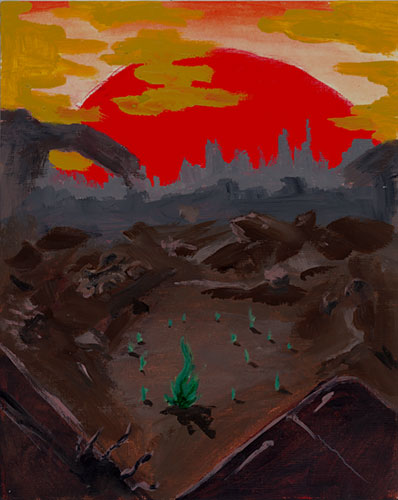
Monkey's pieces: